
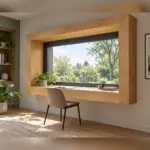
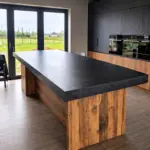
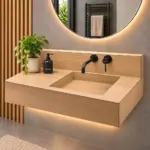
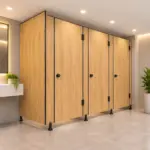
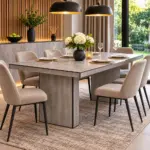
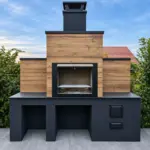
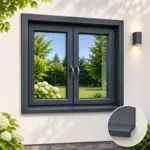
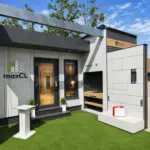
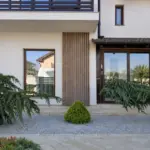
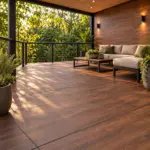
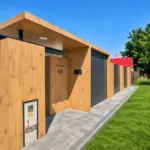
What compact HPL is.
The XCL boards used by maxCL are compact HPL: thermosetting resins reinforced with cellulose fibres, with decor and UV protection on both faces. What it is, how it performs outdoors and how it did in testing.
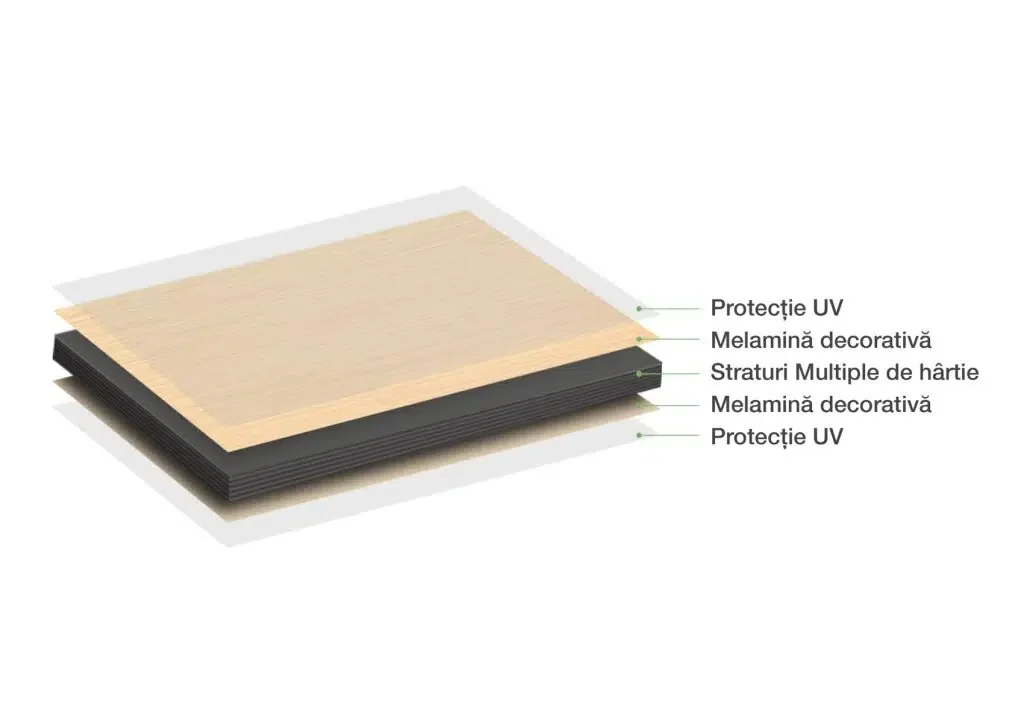
What compact HPL is
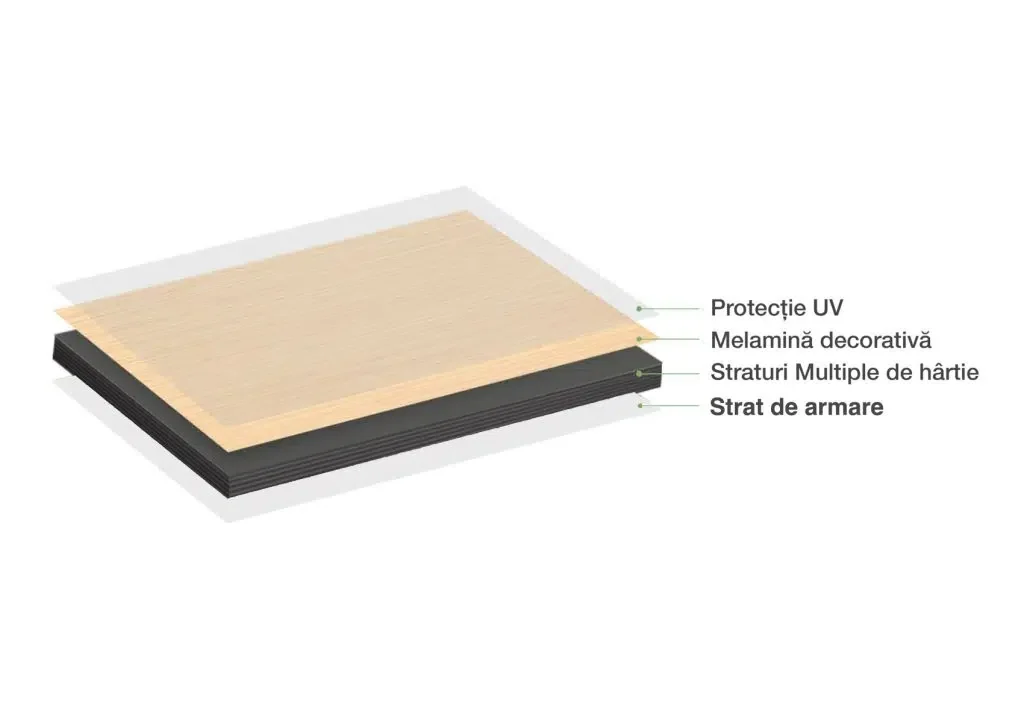
Compact HPL, layer by layer.
XCL boards are a new generation of High-Pressure Laminate (HPL) boards: composite materials made by pressing together a mix of kraft paper, phenolic resin and layers of decorative paper, with a protective melamine layer.
With a density of 1.45 g/cm³, the XCL panel is highly resistant to damage and remarkably stable structurally: it needs no substrate support at thicknesses above 6 mm.
They are made to withstand bad weather, with protection against UV rays, extreme temperatures, moisture and other environmental factors.
- 1.45g/cm³, board density
- ≥ 6 mmno substrate support needed
- 2 facesdecor and UV protection
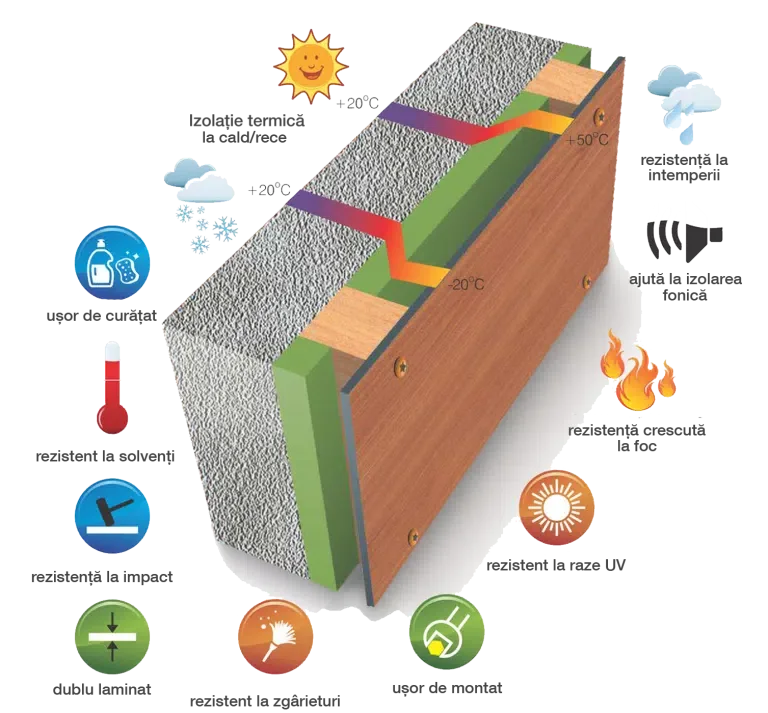
The advantages of exterior HPL
What the board does for your home.
- Thermal insulation in heat and cold
- Weather resistance
- Helps with sound insulation
- Improved fire resistance
- UV resistant
- Easy to install
- Scratch resistant
- Double laminated
- Impact resistance
- Solvent resistant
- Easy to clean
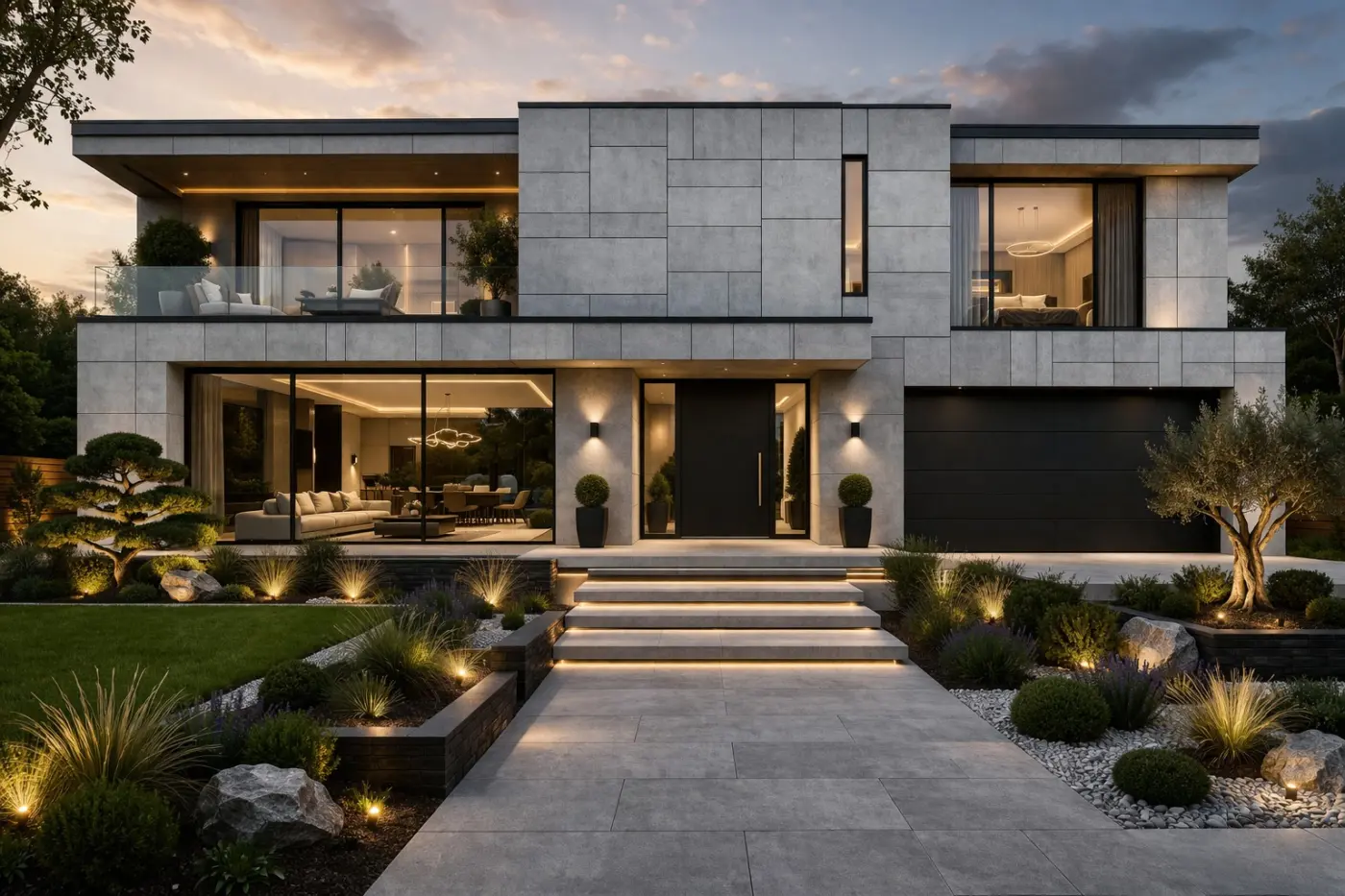
Thicknesses and finishes
Three thicknesses for facades, four for decking.
Facades, cladding and fences
- 6 mm
- 8 mm
- 10 mm
The decor is on both faces, for facades that are seen from every angle. Single-sided print is available to order only. Textured lamination.
Raised (floating) decking
- 8 mm
- 10 mm
- 12 mm
- 14 mm
With anti-slip lamination, for terraces, pontoons and paths.
Performance test results
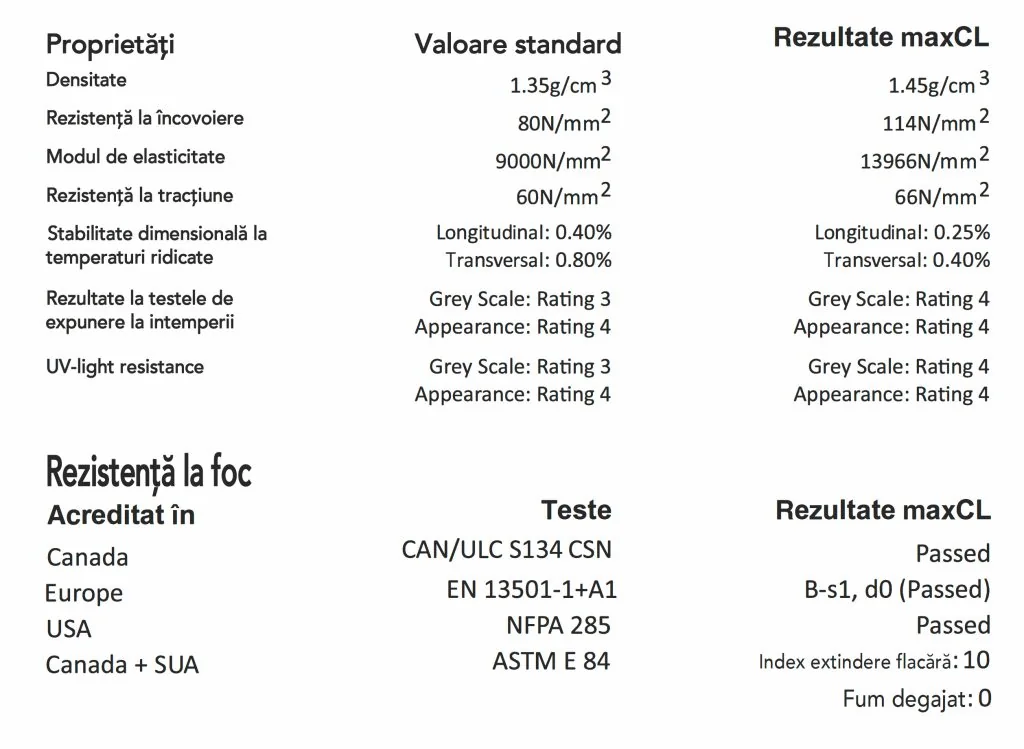
maxCL against the standard value.
| Property | Standard value | maxCL result |
|---|---|---|
| Density | 1.35 g/cm³ | 1.45 g/cm³ |
| Flexural strength | 80 N/mm² | 114 N/mm² |
| Modulus of elasticity | 9,000 N/mm² | 13,966 N/mm² |
| Tensile strength | 60 N/mm² | 66 N/mm² |
| Dimensional stability at elevated temperature | long. 0.40% · trans. 0.80% | long. 0.25% · trans. 0.40% |
| Weathering exposure | Grey Scale 3 · Appearance 4 | Grey Scale 4 · Appearance 4 |
| Resistance to UV light | Grey Scale 3 · Appearance 4 | Grey Scale 4 · Appearance 4 |
Fire resistance
Tested in Europe and in North America.
- EuropeEN 13501-1+A1B-s1, d0 (passed)
- CanadaCAN/ULC S134Passed
- USANFPA 285Passed
- Canada + USAASTM E 84Flame spread index 10 · smoke developed 0
Technical data sheet
In line with EN 438, part 6.
Values measured on the board, against the standard’s requirements for exterior HPL (EDF).
| Property | Requirement | maxCL |
|---|---|---|
| Thickness (5 ≤ t < 8 mm) | 6.00 ± 0.40 mm | 6.15 mm |
| Edge straightness | max. 1.50 mm/m | 0.90 mm/m |
| Edge squareness | max. 1.50 mm/m | 0.80 mm/m |
| Large-diameter ball impact, t ≥ 5 mm | min. 1,800 mm | 2,000 mm |
| Mass increase in humidity, t ≥ 5 mm | max. 8% | 3% |
| Artificial weathering, 1,500 h | Grey Scale 3 | Grey Scale 4 |
| Climatic shock: flexural strength index | min. 0.95 | 1.10 |
| Flame spread | Class 1 | Class 1 |
Accreditations
The marks and standards declared by the manufacturer.

GREENGUARD, CE, FSC and the European standard EN 438. Installation is carried out on ventilated facade systems accredited at European Union level.
Tell us what you want to do
Send a few photos or approximate dimensions. Fill in only what you know — we will settle the rest together.